
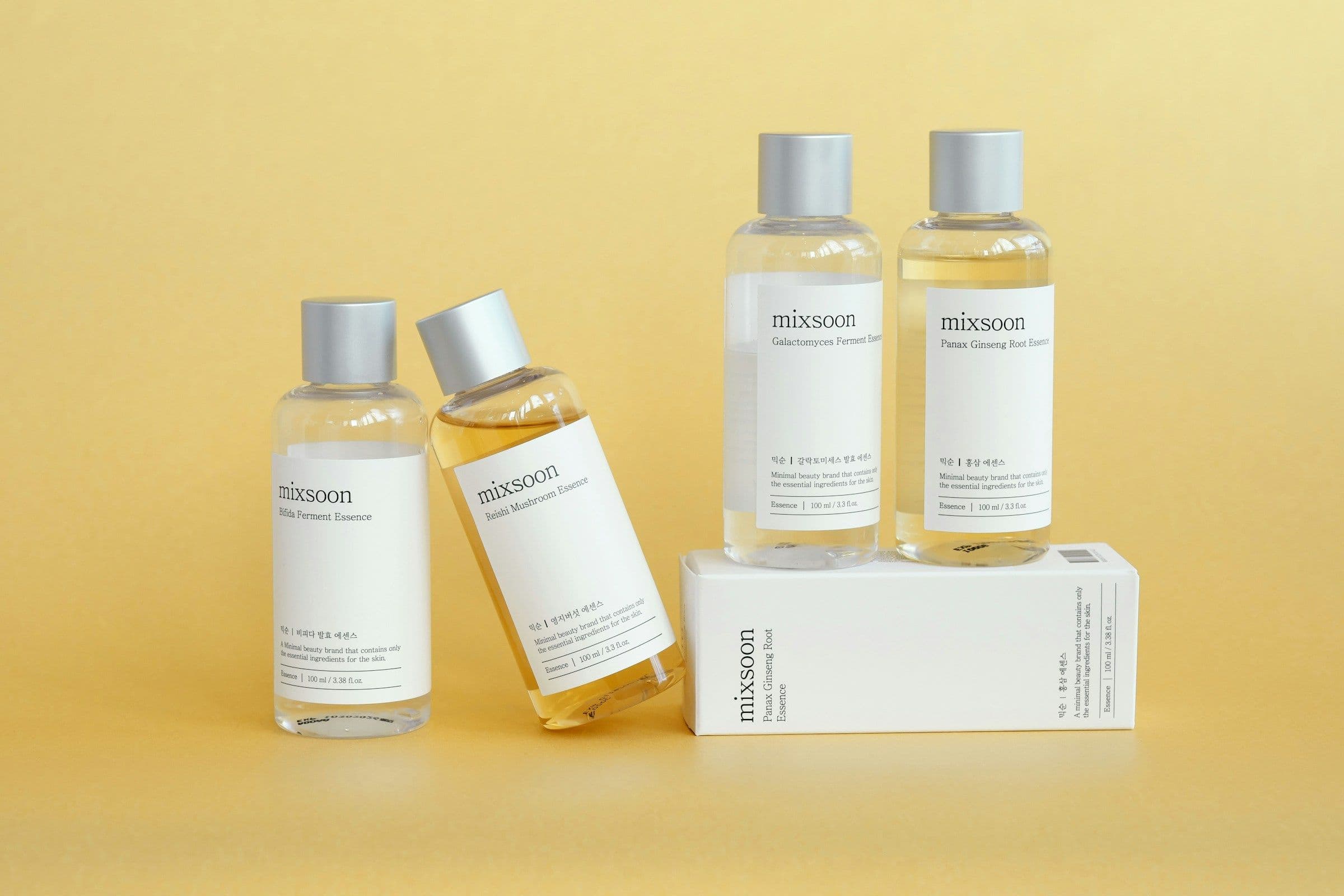
K-beauty is no longer a trend. It's a category.
Interest in Korean skincare is a research starting point. Validate the target customer, landed price, benefit evidence and buying route for your own products before committing to global expansion.
The K-Beauty Advantage in Global Markets
Korean beauty brands have structural advantages, but those advantages only matter when they are translated into a market-native offer:
Innovation perception: Western consumers often associate Korean skincare with faster product innovation and strong formulation discipline. Treat that as a credibility signal, not a finished positioning strategy.
Ingredient story: explain the formulation's relevant ingredients and the evidence for the finished product. An ingredient's popularity does not establish your product's benefit or differentiation.
Skincare routine culture: Korean skincare helped global buyers think in routines, not single products. That gives brands room to sell education, bundles, replenishment, and retention.
Aesthetic quality: K-beauty packaging and product texture often create strong social content. That advantage needs local proof, English claims discipline, and creator distribution.
What the Winning K-Beauty Brands Do Differently
1. They Own a Specific Benefit, Not a Category
Give the customer a specific reason to consider the product. Illustrative positioning routes include a clearly evidenced benefit, an ingredient-led routine or a documented heritage story. These are options to test, not claims about other brands or KLAPS clients.
Actionable: Before you localize anything, write a one-sentence positioning statement: "For [target customer] who [problem], [Brand] is the only [category] that [unique benefit] because [proof]." If you can't write this cleanly, your positioning isn't clear enough to export.
2. They Lead with the Problem, Not the Product
Compare problem-led, ingredient-led and brand-led messages for the intended audience. Keyword Planner estimates and customer research can help select terms, but do not assume one intent is stronger for every market.
- Before writing product pages, collect the real search terms, review language, and creator hooks for the target market.
For each proposed headline or description, record the customer concern, the finished-product evidence and the intended market. Review benefit and safety wording before publication; a localized sentence cannot make an unsupported claim acceptable.
3. They Build the Trust Stack Before Spending on Ads
K-beauty brands face a specific trust challenge in Western markets: consumers love Korean skincare as a category, but they don't know your brand. Trust must be established before paid ads will convert efficiently.
Build a trust checklist for the audience rather than assuming a universal ranking:
Customer reviews: collect honest experiences, disclose gifts or rewards, and follow the review platform's policy. Do not reward positive ratings or hide legitimate negative experiences.
- UGC content — real customers using the product on faces that look like your target customer
- Media coverage — relevant third-party coverage can reduce trust friction when the brand is unfamiliar
Expert input: verify qualifications, disclose material connections and support the actual endorsed claim. An esthetician's review is not an exemption from advertising requirements.
Ingredient transparency: use the labeling terminology required for the destination market and support the finished-product claims. A shared INCI list alone does not establish compliance everywhere.
4. They Use Shopify Markets for True Multi-Country Selling
Use Shopify Markets to organize the target markets, then confirm the features your plan and eligible payment setup actually support.
Review market prices, settlement and customer checkout currencies separately. Confirm local payment methods against the merchant's actual provider eligibility and supported buyer country and currency.
Choose supported international domains or subfolders and verify the resulting language, canonical and hreflang signals. Domain configuration does not guarantee that Google will show a particular version.
- Duty and tax planning — show total landed cost clearly where possible, and verify the tax and importer setup for each market before launch.
Without market configuration, buyers see friction exactly where conversion is most fragile: price, language, shipping, payment, and duties.
5. They Build Retention Before They Scale Acquisition
Model retention using observed cohorts. Repeat timing and customer value depend on the product, purchase frequency, discounts and costs.
Track net revenue, product cost, fulfillment, payment fees, returns and acquisition cost over a defined cohort window. A revenue LTV higher than CAC does not by itself prove profit; future repeat purchases remain assumptions until observed.
What to build before scaling ads:
- Klaviyo welcome series — introduce your brand story and the full routine (cross-sell naturally)
Replenishment: test timing from actual reorder intervals and product instructions, with reordered and unsubscribed customers excluded.
Subscriptions: model the discount, delivery frequency and cancellation experience before offering the service. A fixed 15% discount is not a universal recommendation.
Loyalty: model reward cost. If reviews or social posts are rewarded, disclose the incentive, avoid any positive-sentiment condition and check platform rules.
Market-Specific Launch Checks
Choose one selling route and product scope first. The following are review topics, not a complete regulatory clearance or a prediction of consumer preference.
United States: check cosmetic versus drug classification, ingredient naming, claims and applicable MoCRA obligations. Sunscreen and treatment-style claims need a separate product-specific review. Model shipping offers from costs rather than assuming every buyer expects one free-shipping threshold.
European Union: establish the applicable responsible person, cosmetic safety report and product notification, and review current ingredient and claim rules. For email marketing, assess GDPR and the destination country's electronic marketing requirements. Choose a consent process you can demonstrate; do not treat double opt-in as a single blanket GDPR rule.
Japan: confirm whether the product is an ordinary cosmetic or a quasi-drug, then review labeling, notifications and the operator's licensing obligations for the actual import and selling route with the responsible authority. A generic 'Japanese INCI' translation or an unspecified import license is not a sufficient launch check.
Southeast Asia: select the destination country before choosing marketplace, language, payment, import and customer-service arrangements. Confirm the seller-account and integration requirements of each channel. Do not apply one platform or wallet list to the whole region.
For every market, compare delivery promises with current carrier or fulfillment quotes and test the messages with the intended customers. Do not infer certification preferences, acceptable delivery times or willingness to pay from nationality alone.
The klaps K-Beauty Playbook
Use decision gates rather than a guaranteed timeline:
Validate the customer, positioning and product requirements before committing to the store scope.
Prepare supported checkout, localized content, honest review collection, consent-aware email flows and fulfillment before a pilot.
Run bounded channel tests and review contribution margin, questions and returns. Expand the offer or second market only when the evidence and operating capacity support it.
Contact KLAPS to discuss the launch scope, or use the global readiness check to organize the questions that need further review.
Sources
- Supported countries for Shopify Payments
- Markets requirements and considerations
- Local-currency guidelines and restrictions
- International domains
- EDPB: Guidelines 05/2020 on consent
- European Commission: Cosmetics legislation
- European Commission: Cosmetic product notification portal
- FDA: Cosmetic, drug or both?
- FDA: Registration and Listing of Cosmetic Product Facilities and Products
- FDA: Cosmetic Ingredient Names
- FDA: US sunscreen requirements
- FTC: Endorsement Guides questions and answers
- Google Ads: Use Keyword Planner
- PMDA: Cosmetics and licensing FAQ