
Paid acquisition gets traffic today. SEO builds a base of search visibility that can compound over time and reduce dependence on paid spend.
For a Korean brand entering a new market, begin with the queries customers use and the information competing pages provide. Korean origin, ingredients, or manufacturing can be relevant to the offer, but the search opportunity needs evidence for the specific product and market.
This guide covers technical and content checks that help search engines find and understand a Shopify store.
The SEO Opportunity for Korean Brands
Research problem, ingredient, routine, sizing, compatibility, shipping, and product-comparison queries alongside category terms. Prioritize topics that fit the offer and the customer questions the team can answer well.
Review the actual search results for the chosen queries. Brand stores, marketplaces, editorial pages, and community discussions can reveal the content customers need, but their share of demand varies by query.
Shopify provides a technical starting point, but themes, apps, custom storefronts, and content choices can introduce issues. Audit the actual store before deciding which technical work is required.
Technical SEO: The Shopify Foundation
1. Crawlability and Indexation
Before anything else, confirm Google can correctly crawl and index your store.
Shopify generates robots.txt at the domain root. Inspect the actual file and any robots.txt.liquid customization; the documented default rules cover operational and duplicate URLs. Robots controls crawling and is not a complete indexing guarantee.
Problems arise when brands add custom robots.txt rules that accidentally block important pages. Verify your robots.txt isn't blocking /products/, /pages/, or /blogs/.
Submit your sitemap to Google Search Console: Shopify generates yourstore.com/sitemap.xml automatically. Submit this to Google Search Console. Verify that your key product and collection pages are included and not blocked.
Review canonical tags on duplicate or parameterized URLs. For a single-page product group, the preferred canonical is typically the base product URL. Distinct multi-page variants and localized pages require their own deliberate treatment.
- Example single-page product group: example.com/products/korean-serum is the preferred product URL
- A variant-selecting query URL can point to that base canonical in a single-page setup; do not apply this rule blindly to separate variant pages
2. International SEO and Hreflang
When equivalent pages exist for different languages or regions, hreflang helps Google identify the appropriate version. Verify the actual language and region targets rather than assuming the tags alone determine ranking or language detection.
Inspect the annotations on representative rendered localized pages:
Shopify generates automatic hreflang from market and language configuration. Confirm that alternate URLs are reachable, include the page itself, and link back to each other. Check for duplicate or conflicting app/theme annotations. An x-default page can provide a fallback, but it is not mandatory for every valid setup.
Subfolders are often easy to maintain and Shopify recommends them for most international stores. Subdomains and separate domains can also be appropriate; choose based on the market strategy and maintenance requirements, then verify the localized URLs.
3. Page Speed (Core Web Vitals)
Measure the current Core Web Vitals with real-user data at the 75th percentile, separately for mobile and desktop. Use lab tests to diagnose problems, then verify the field result.
LCP (Largest Contentful Paint): loading performance. Good threshold: 2.5 seconds or less.
- Compress hero images and serve modern formats where appropriate
- Make the likely LCP image discoverable early, avoid lazy-loading it, and use high fetch priority selectively
- Use a CDN (Shopify's CDN handles this automatically for hosted assets)
CLS (Cumulative Layout Shift): visual stability. Good threshold: 0.1 or less.
- Always set explicit width/height on images
- Use suitable fallback fonts and match their metrics where needed; font-display: swap alone does not prevent layout shifts
- Avoid inserting dynamic content above existing content
INP (Interaction to Next Paint): interaction responsiveness. Good threshold: 200 milliseconds or less. INP replaced FID as a Core Web Vital.
- Review apps and third-party scripts that affect the measured pages, and remove low-value code where the performance cost is established
- Measure each app’s actual impact rather than using installed-app count as a pass/fail rule
Performance checks to prioritize from measured issues:
- Use an up-to-date theme and assess representative product, collection, and landing pages with their actual content
- Review unused app assets and any code left in the theme after uninstalling an app
- Shopify image optimization is built in; check appropriate source dimensions and the sizes/formats delivered by the theme
4. Structured Data
Structured data (Schema.org JSON-LD) helps Google understand your content and can enable rich results such as star ratings, price, and availability. Treat it as eligibility, not a guaranteed ranking lever.
Inspect the product markup already emitted by the theme and review app. Use Google’s required properties for the applicable result and validate representative pages with the Rich Results Test.
Prices, availability, and any rating data must match current visible page content. Aggregate ratings are not mandatory for every product snippet. Correct markup creates eligibility; it does not guarantee stars or another rich result.
On-Page SEO: Product Pages
Product pages connect search intent with the details a customer needs to decide whether to buy. Prioritize the pages that fit meaningful demand and the business offer.
Title Tag Optimisation
Review the actual page title emitted by your theme and the search engine listing settings.
Use concise, distinctive wording that accurately describes the product and the brand; no universal delimiter formula guarantees better ranking.
Illustrative title wording without an unsupported benefit deadline:
- Broad title: Brightening Serum | Example Brand
- More descriptive title: Korean Galactomyces Serum | Example Brand
Include terms that accurately describe the product. Use benefit, efficacy, or social-proof claims only when they are supported.
Meta Descriptions
Write a unique meta description that accurately summarizes the page. Google may use it or select other on-page text for the query; assess clicks without treating a description change as a promised ranking gain.
Include:
- Primary benefit in the first line
- A supported differentiator or verified social proof
- A soft call to action
There is no fixed Google character limit. Keep the description concise and useful; the displayed snippet may be truncated to fit the device width.
Product Page Content
A product description should answer the customer’s real questions in useful, indexable text. Short copy is not automatically a ranking failure.
Choose the depth needed to explain the product rather than a ranking word-count target. Useful topics include:
- Who the product is for — the specific problem it solves
- How it works — ingredient story, mechanism of action
- How to use it — instructions and expectations supported by the product evidence
- Who shouldn't use it — builds trust; shows you understand your audience
- Questions and answers — address the 5 most common questions about the product
The priority is useful, accurate information in indexable text, written for the intended customer.
Content SEO: The Blog Strategy
Informational guides can address customer questions before a purchase decision. Choose topics that connect naturally to the products and the audience.
Use observed queries and support questions to identify useful guides, such as ingredient explanations, routines, suitability, or product comparisons. Validate demand and scope for the actual catalog.
The topic cluster model:
Group related guides around a manageable set of topics connected to the products:
Cluster example: Korean skincare for beginners
- Pillar page: "The Complete Korean Skincare Routine for Beginners"
- Supporting posts: "What Is the 10-Step Korean Skincare Routine," "Korean vs US Skincare: Key Differences," "Best Korean Ingredients for Dry Skin"
- Product pages: linked from each supporting post at relevant points
Relevant internal links help readers and Google discover related pages and understand the site. A topic cluster is an editorial structure, not a guarantee of improved rankings across every page.
Editorial quality checks:
- Make the page more useful than the current search results, not merely longer
- Use the primary search language naturally in the title, opening, headings, and metadata
- Use related terms naturally throughout (not keyword stuffing)
- Include images with descriptive alt text
- Link to relevant product pages and other cluster content
Backlink Strategy for New Brands
Build useful references and relevant coverage over time. Possible outreach activities include:
1. PR and earned media: Offer useful product information or samples for independent editorial consideration. Do not condition a gift on a link that passes ranking credit.
2. Relevant category publications: Seek coverage where the product or expertise fits the publication’s audience. Do not promise a particular link-weight or ranking effect.
3. Journalist and creator queries: Respond to relevant media requests in your category. Korean beauty or Korean manufacturing expertise can be a differentiator when the answer is specific.
4. Supplier and partner references: Use links when they help explain a real relationship or resource. Avoid compulsory ranking-credit links or excessive link exchanges.
Avoid links created primarily to manipulate rankings. Advertising or sponsorship links can be legitimate when qualified with sponsored or nofollow; assess a directory’s value rather than assuming every listing is harmful.
Measuring SEO Progress
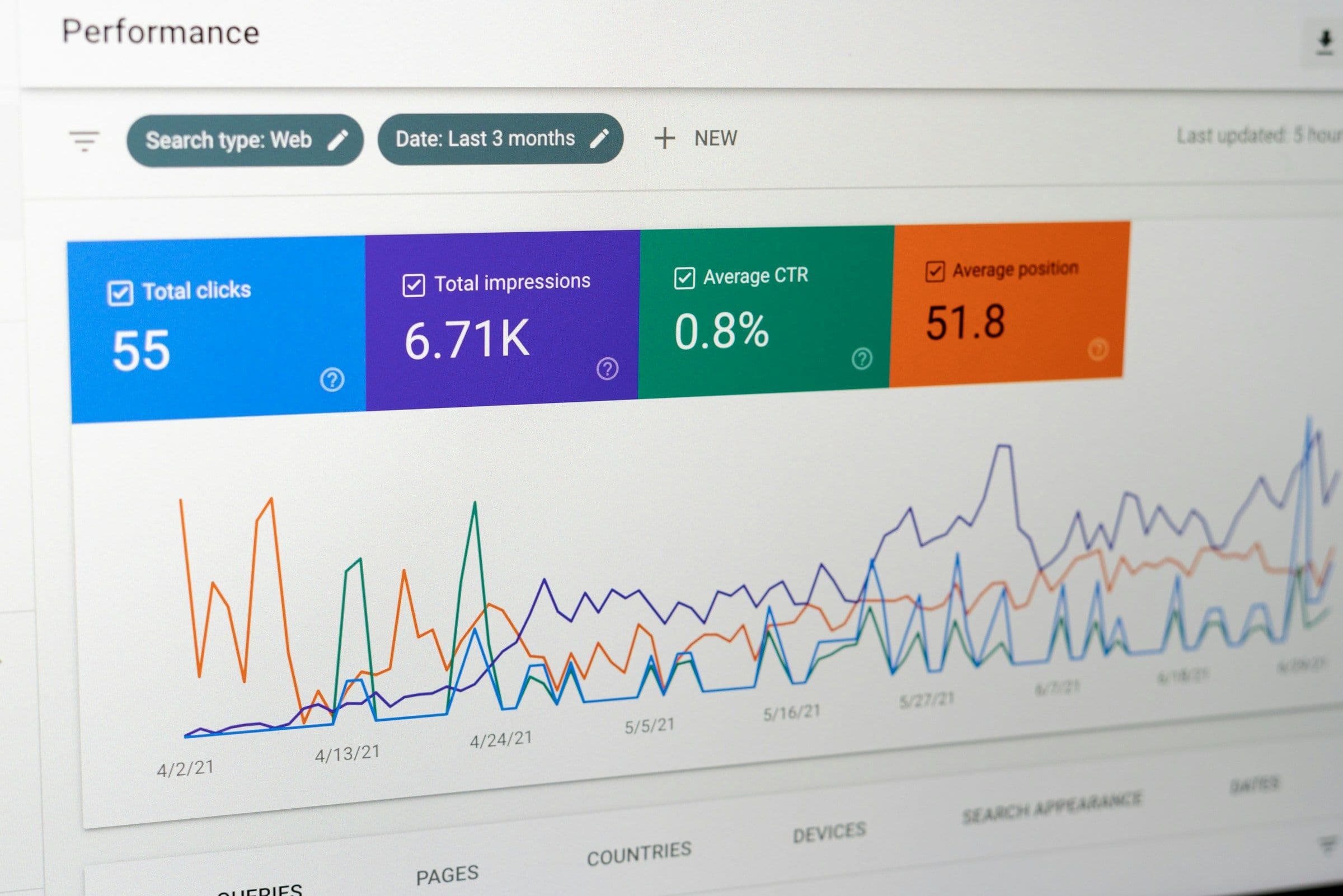
Review search visibility and business outcomes over time. A monthly review can cover:
- Indexing: Use the Page indexing report and URL Inspection to confirm that important canonical pages are indexed; duplicate and alternative URLs need not all be indexed
- Impressions: Your pages appearing in search results, even if not clicked
- Average position: Review the query and page context alongside impressions and clicks, rather than treating a position band as a guaranteed traffic level
- Organic visits and outcomes: Review relevant landing-page visits, purchases, or enquiries in the chosen analytics setup
Monitor impressions and clicks together and investigate changes by query, page, and market. There is no fixed sequence in which new impressions guarantee later clicks.
Working With klaps on SEO
klaps handles technical SEO as part of Shopify build engagements: structured data, hreflang configuration, Core Web Vitals, information architecture, redirect planning, and product-page content structure.
If organic discovery is a priority, review the store’s technical signals, useful content, and actual search visibility to identify the next improvement.
Talk to us about building an SEO foundation for your Shopify store →