
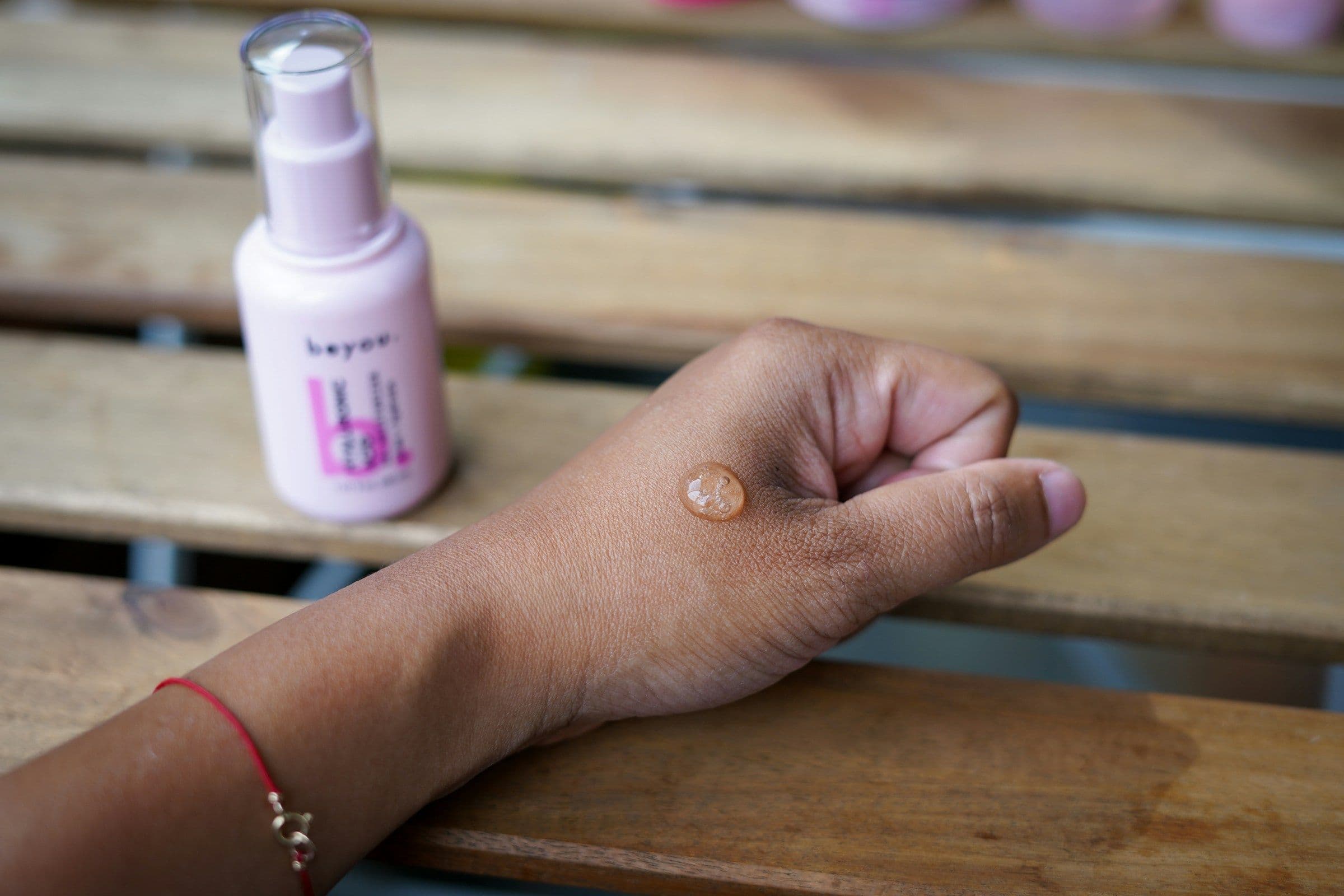
A Korean origin story can introduce a skincare brand to US buyers, but it does not establish demand for a particular product. Validate the customer problem, offer, evidence and operating costs before committing to a launch.
This guide covers the operating decisions Korean beauty brands need to make before entering the US market.
The K-Beauty Positioning Problem
Check for two positioning errors:
Error 1: Over-relying on origin story. "This product is made in Korea, using traditional Korean ingredients, following K-beauty philosophy." Origin can create trust, but it no longer differentiates by itself.
Error 2: Generic US beauty positioning. Abandoning Korean identity entirely to compete head-on with US brands. This throws away your actual competitive advantage.
The stronger positioning: specific transformation + credible K-beauty ingredient story.
Not "Korean skincare for glowing skin." Instead: "Built for visible texture and redness concerns, with a clear ingredient story and claim support that can survive regulatory review."
Explain the intended use and the supporting evidence clearly. Test whether your target customers understand and value that difference.
The Compliance Review
Before selling to US consumers, review product classification, labeling, ingredient names, claims, facility/product listing obligations, and importer responsibilities. Korean brands frequently underestimate this step.
Cosmetics (skincare, makeup):
- Most cosmetics do not require pre-market approval, but they are still regulated.
- Labels need compliant ingredient names, net quantity, business information, and required warnings where relevant.
- Claims can change classification. "Treats acne" or disease/treatment-style claims can move the product into drug territory.
- Color additives and restricted ingredients need separate review.
SPF products:
- Sunscreens are regulated as OTC drug products in the US.
- Active ingredients, testing, Drug Facts labeling, and listing requirements need specialist review.
- Do not assume a Korean or EU sunscreen formula can be sold in the US without reformulation or label changes.
Action items before US launch:
- Check every ingredient declaration against applicable US common or usual names and the complete label requirements. Do not assume an INCI translation alone makes the US label compliant.
- Legal review of product claims — remove any that could be read as drug claims
- For SPF, obtain product-specific US regulatory review before listing or advertising. For cosmetics, separately assess applicable MoCRA facility registration, product listing and exemptions; registration or listing is not FDA product approval.
Include the review scope, fees and lead time in the launch budget before committing inventory or publishing claims.
Where K-Beauty Sells: Channel Strategy
Compare channels using the same offer and cost assumptions.
Amazon: evaluate demand signals, seller fees, advertising costs, fulfillment, returns and the information available to the brand. A marketplace can add reach without proving a profitable route for every product.
Retail: compare wholesale margin, payment terms, shelf requirements, returns and merchandising control before treating distribution as a growth solution.
DTC Shopify: evaluate direct access to customer interactions against acquisition, support and fulfillment costs. Collect and use customer data only within the applicable permissions.
Choose a channel mix that protects learning and contribution margin. None of these channels is automatically the most profitable.
The mistake is treating one channel as the whole strategy. US entry needs a relationship channel, a proof channel, and an acquisition channel.
Test Creator Content Before Scaling
Treat routines, ingredient explanations and documented product demonstrations as creative hypotheses. Measure which formats help the intended audience understand the offer.
Before using a creator's content, agree on rights, disclosure of gifts or payment, and the product claims the evidence supports. Review before/after content for the product, market and advertising platform. Do not promise a set result or assume reposts will compound.
Creator budget logic:
- Start with a small batch of micro-creators before paying for larger reach.
- Prioritize content quality, audience fit, and usage rights over follower count.
- Pay more only after you know which hooks and proof formats work.
Creator selection criteria: skincare content history, relevant audience, clear disclosure habits, and proof formats that match your claims.
Unit Economics: What K-Beauty DTC Actually Looks Like
Use unit economics as a model, not a universal benchmark:
Scroll horizontally to read the table.
| Metric | What To Model | Why It Matters |
|---|---|---|
| AOV | Hero product, bundles, free-shipping threshold | Determines first-order contribution |
| CAC | Paid, creator, and blended acquisition | Shows how much learning costs |
| LTV | Repeat purchase over 90, 180, and 365 days | Shows whether paid acquisition can scale |
| Email revenue quality | Flow-driven vs discount-driven revenue | Separates retention from promotion |
| Repeat purchase rate | Cohort behavior by first product | Shows which products should lead acquisition |
Early acquisition can look uncomfortable because the first purchase is also buying data, reviews, creator proof, and market learning. That only works if cohorts begin to repeat.
The Product Line Strategy
Choose a launch assortment the team can support with compliant labels, stock, content and customer service. A small pilot assortment can simplify learning; select its size from those constraints.
Prioritize products that:
- Solve a specific, search-able problem (dark spots, texture, dehydration)
- Have evidence for the proposed benefit claims and a demonstration format suitable for the target market
- Have a repeatable use occasion (daily routine)
The hero SKU becomes the top-of-funnel product. Everything else is sold to existing customers via email and product bundles.
Use an ingredient story only where it helps explain the finished product. Support the actual benefit claim with appropriate evidence rather than assuming an ingredient name proves efficacy.
Working With klaps on US Beauty Market Entry
klaps helps Korean beauty brands structure US DTC entry: market validation, claim and compliance review coordination, Shopify architecture, US-oriented product pages, Klaviyo, creator proof, and performance testing.
If you're planning a US launch in the next 6 months, starting the conversation now is the right timing — FDA compliance review, inventory planning, and creator seeding all have lead times.
Schedule a US market entry strategy call →